Treat each ear as a separate fit
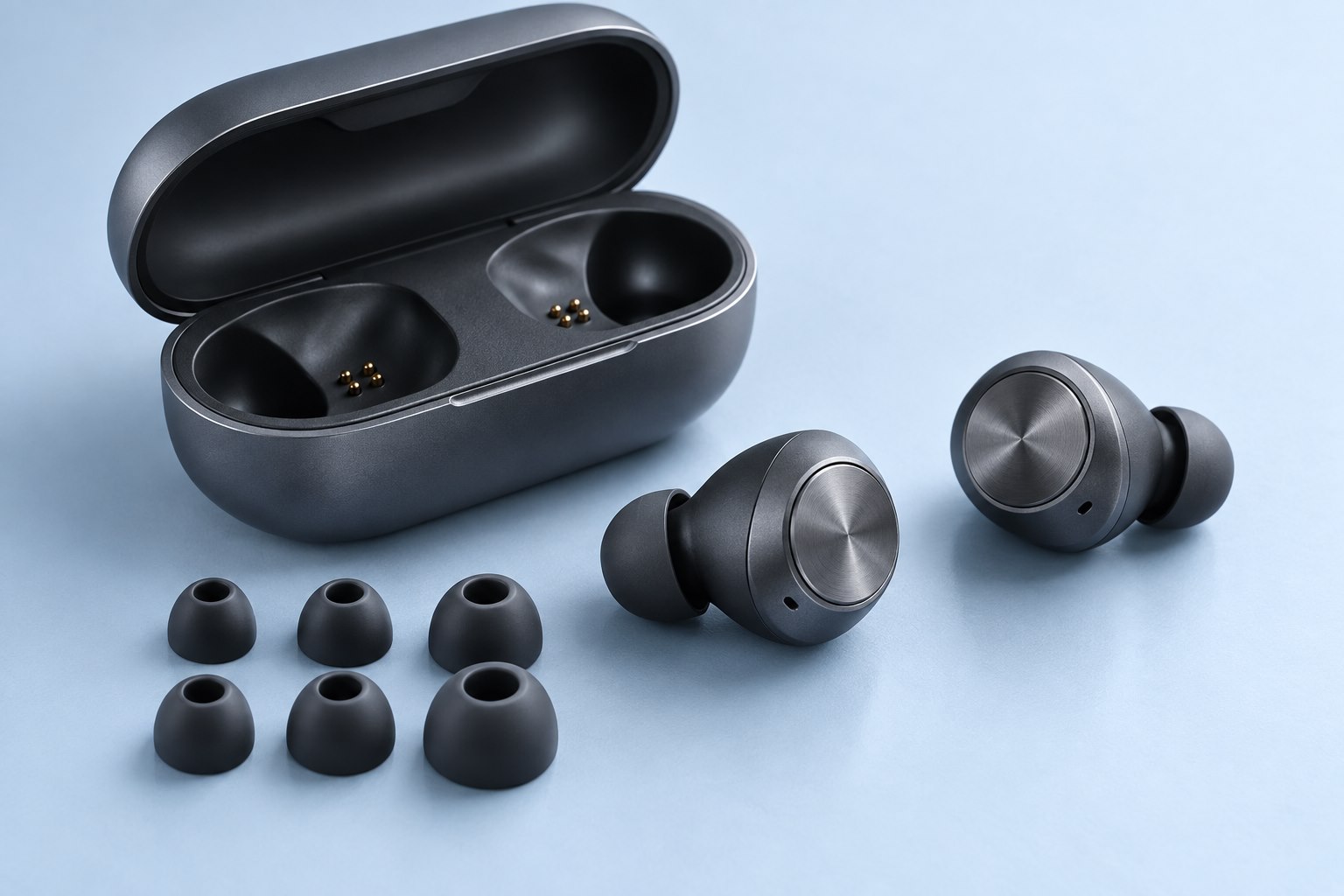
The same tip size does not have to suit both ears. Begin with the supplied sizes and fit each side independently. A useful seal gives a stable sound at a comfortable volume without needing to push the earbud deeper every few minutes. If bass changes dramatically when you gently hold the earbud in place, fit deserves attention before sound settings. Some earbuds include a fit check in their companion app. Use that as an additional clue, then judge comfort and stability during ordinary movement rather than relying on a single pass message.
Size is only one dimension
A wider tip can help when a smaller one slips, but width alone does not explain every poor fit. Tip length, flange shape, material, and the angle of the earbud housing all influence the result. A large tip that folds as it enters may seal less reliably than a smaller one. Foam tips behave differently from silicone and may need more frequent replacement. Follow the tip maker's fitting and care directions. Avoid forcing a tip or accepting persistent discomfort as a necessary break-in period; the objective is a gentle, repeatable fit.
Test with the activities you actually do
Put the earbuds in, play familiar speech, then turn your head, look down, and speak a few sentences. Jaw movement can loosen a fit that seemed secure while sitting still. Repeat with your usual glasses or hat if these touch the housings. For desk use, check whether one side loosens while you talk on a call. For walking, judge retention without continually touching the controls. This is a practical home check, not a measurement of water resistance or a guarantee that the earbuds will remain secure during every activity.
Replacement tips and lasting fit
Aftermarket tips need to attach securely to the nozzle and allow the earbuds to fit in their charging case. A compatible nozzle diameter is not enough if the tip blocks a sensor, catches on the case lid, or prevents charging contacts from meeting. Check the exact earbud model in the compatibility list, including its generation. Attach the tip according to the instructions and inspect that it is fully seated. Close the case gently and verify that both earbuds report charging. Do not force the lid to make a taller replacement tip fit.
A better seal may restore bass and improve passive isolation, but it will not repair a damaged driver, clear a blocked microphone, or solve a failing wireless connection. If one side remains quieter, try the manufacturer's cleaning and balance checks before buying another set of tips. Keep spare tips in a small clean container so they are not compressed beneath cables. Replace tips that are torn, loose, or no longer hold their shape. Once you find a dependable combination, note the size used on each side; that small record makes future replacement much simpler and prevents repeating the entire fitting process.
When comparing sizes, change one side at a time and keep the playback level fixed. Otherwise a volume adjustment can hide a poor seal. Take a short break between attempts so repeated handling does not confuse the comfort assessment. Keep the original tips until you have confirmed the replacements work in the case as well as in your ears.
Sources & further detail
These references support the technical context. Examples and selection advice are editorial explanations; verify the documentation for your exact equipment and software.
A detail we should revisit? Send the guide URL and the relevant documentation to SmithKent5791@outlook.com.
Read the editorial policy