A Power Bank's Output Speed Does Not Tell You Its Recharge Time
Read the input rating, charging profile, and required wall adapter before choosing a bank for repeated daily use.
Match the charger to the workload. Understand power budgets, portable batteries, and the details behind a charging claim.
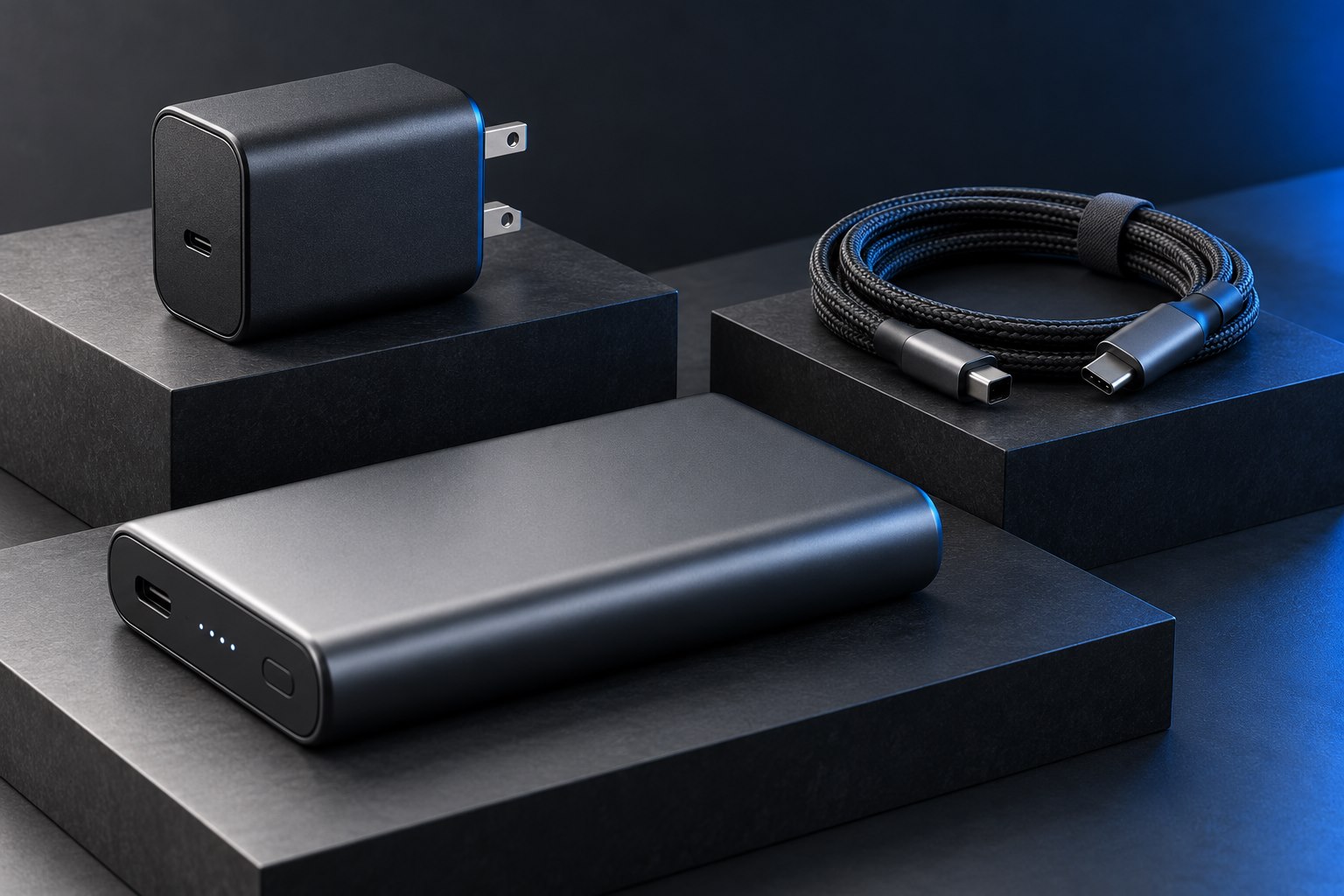
Read the input rating, charging profile, and required wall adapter before choosing a bank for repeated daily use.
Compact power electronics can make a charger easier to carry, but size alone does not establish compatibility, comfort, or quality.
Read the charger's mains input label and the destination's outlet requirements before packing a compact travel kit.
Assign clear places, suitable cables, and realistic simultaneous power instead of turning one outlet into a confusing pile.
Compatibility and available power are separate questions, and the laptop's workload determines whether a lower-power source is practical.
Magnetic attachment is useful, but a magnetic-looking charger is not automatically a certified Qi2 product.
One reduces the usual maximum charge; the other changes when charging finishes. Pick the behavior that fits your day.
Stable placement, compatible watch charging, and unobtrusive indicators often matter more than a large total-power claim.
The vehicle socket, charger input, phone protocol, and cable route all matter when a phone works while it charges.
A large battery is useful only if it can deliver a charging mode the laptop accepts at a practical rate.
The capacity printed in milliamp-hours needs a voltage context, and it is not the same as energy delivered to a phone battery.
A case, camera bump, or attached accessory can interrupt an otherwise compatible charging setup.
A backup battery can cover a genuine energy gap, but usage history may reveal a setting or workload that changed first.
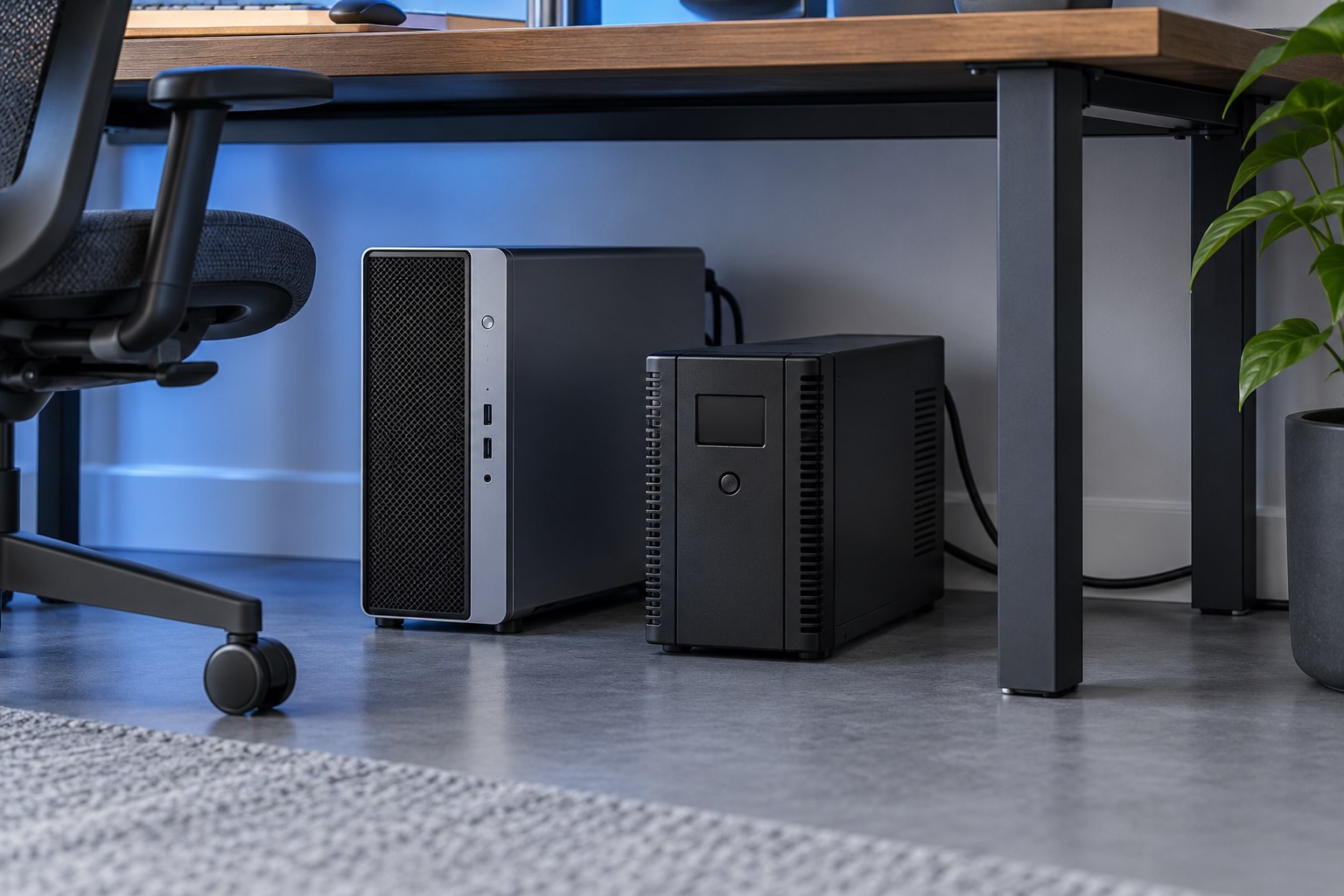
A UPS is maintained equipment. Its battery condition, connected load, and software settings need occasional attention.
A powered router is only one link. Identify the modem, fiber terminal, switches, and access points needed for the connection you use.
Charging a device while refilling the bank is different from guaranteeing uninterrupted power when the wall supply disappears.
More outlets, surge protection, and battery backup are separate functions that can appear in similar-looking products.
A powered-off device still needs an appropriate charge level, a suitable location, and an occasional check.
The best port combination for a laptop and phone may differ from the combination used for two laptops.
The usable charging result depends on the output profiles shared by the charger, cable, and device.
A surge protector can have separate indicators for power, protection, and grounding. Their meanings belong to the exact model.
A UPS needs enough output capacity to support the equipment and enough battery runtime to finish the intended response to an outage.
Voltage and current readings help compare a charging setup, but they do not directly measure battery health or prove product safety.
Read the temperature message, reduce the workload, and let the device return to normal conditions before blaming the charger.
Reduced runtime, physical damage, and a recall notice are different signals—and they deserve different responses.
PPS support, cable requirements, and the phone's own charging conditions can matter more than the charger's largest printed number.
Earbuds, watches, and other low-demand devices can need a supported low-current mode rather than a larger battery.