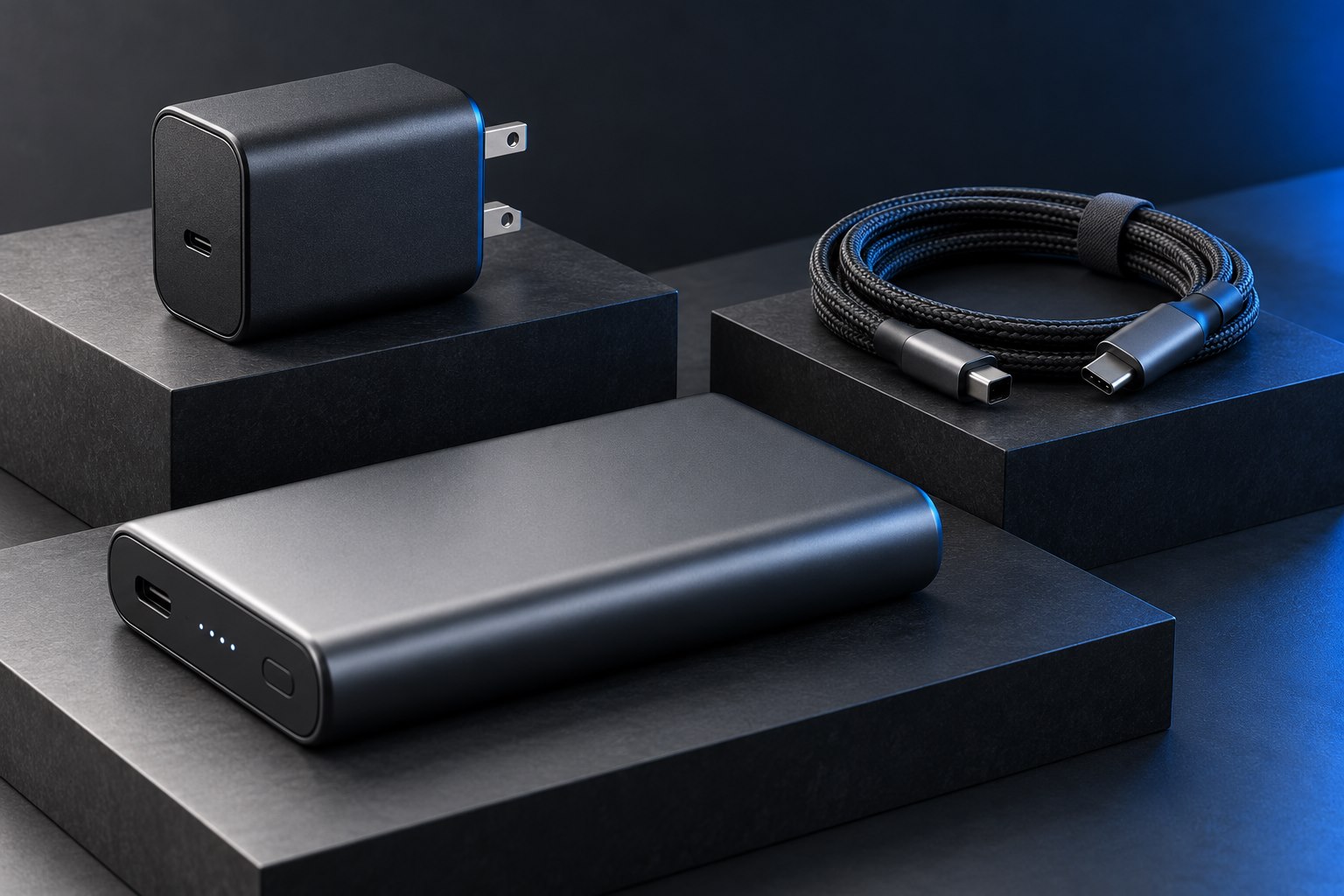
Treat GaN as construction information
GaN refers to gallium nitride technology used in some power electronics. It can support compact charger designs, but the label does not tell you the complete charging behavior. Two GaN chargers with the same headline wattage can have different output profiles, port allocations, cable requirements, and physical layouts. Start with the devices you need to charge and compare those specifications before choosing the smallest enclosure.
A charger that fits neatly in a pocket may still be awkward in a recessed outlet or when several thick plugs are attached. Conversely, a slightly larger desktop charger can put its ports within reach and keep weight away from the wall socket. The useful size comparison includes the required cables and mains lead, not just the dimensions of the charger body.
Compare the supported charging modes
Look for the device manufacturer's required USB Power Delivery or other charging support, then read the charger's actual output table. If a phone needs PPS for its preferred mode, confirm the relevant range and compatibility. If a laptop requires substantial power, check the single-port output and what remains when other ports are used. The semiconductor material cannot compensate for a missing protocol or an unsuitable allocation.
For a travel charger shared by a laptop and phone, prioritize the simultaneous combination you will use in a hotel or meeting room. A high single-port maximum can be misleading if adding the phone reduces laptop output below the level you need. Clear documentation should explain that behavior. Avoid treating a screen on the charger or a colorful charging animation as a substitute for the specification.
Plan for ordinary heat and placement
Chargers convert power and can become warm in use. A compact design does not mean it should be covered, buried in a bag, or pressed under bedding while operating. Follow the manufacturer's placement and operating instructions. Keep the unit on a suitable surface or securely seated in the outlet, with cables arranged so they do not pull on the plugs.
Warmth alone is not a comparative quality test: enclosure material, load, room temperature, and heat distribution all influence what a hand feels. However, visible damage, persistent abnormal odor, discoloration, or unreliable operation warrants stopping use and contacting the manufacturer. Do not open a mains charger to investigate. For normal shopping, choose a traceable product with appropriate safety compliance and usable support information.
Choose the form factor around the routine
For a small bag, folding prongs or a compact approved plug system can reduce snagging. For a permanent desk, accessible ports and a stable base may matter more. For a shared household station, readable port labels and a simple allocation can be more useful than minimum volume. Consider how often the charger is moved and whether its accessories are easy to replace.
After purchase, test the intended devices together and confirm that the charger sits securely in the real location. Include the normal cable lengths rather than only the short cable used for unpacking. A well-chosen GaN charger earns its place through the complete experience: supported modes, enough simultaneous power, sensible placement, and a kit that is convenient to carry or leave connected. The material label is only one part of that decision.
Sources & further detail
These references support the technical context. Examples and selection advice are editorial explanations; verify the documentation for your exact equipment and software.
A detail we should revisit? Send the guide URL and the relevant documentation to SmithKent5791@outlook.com.
Read the editorial policy